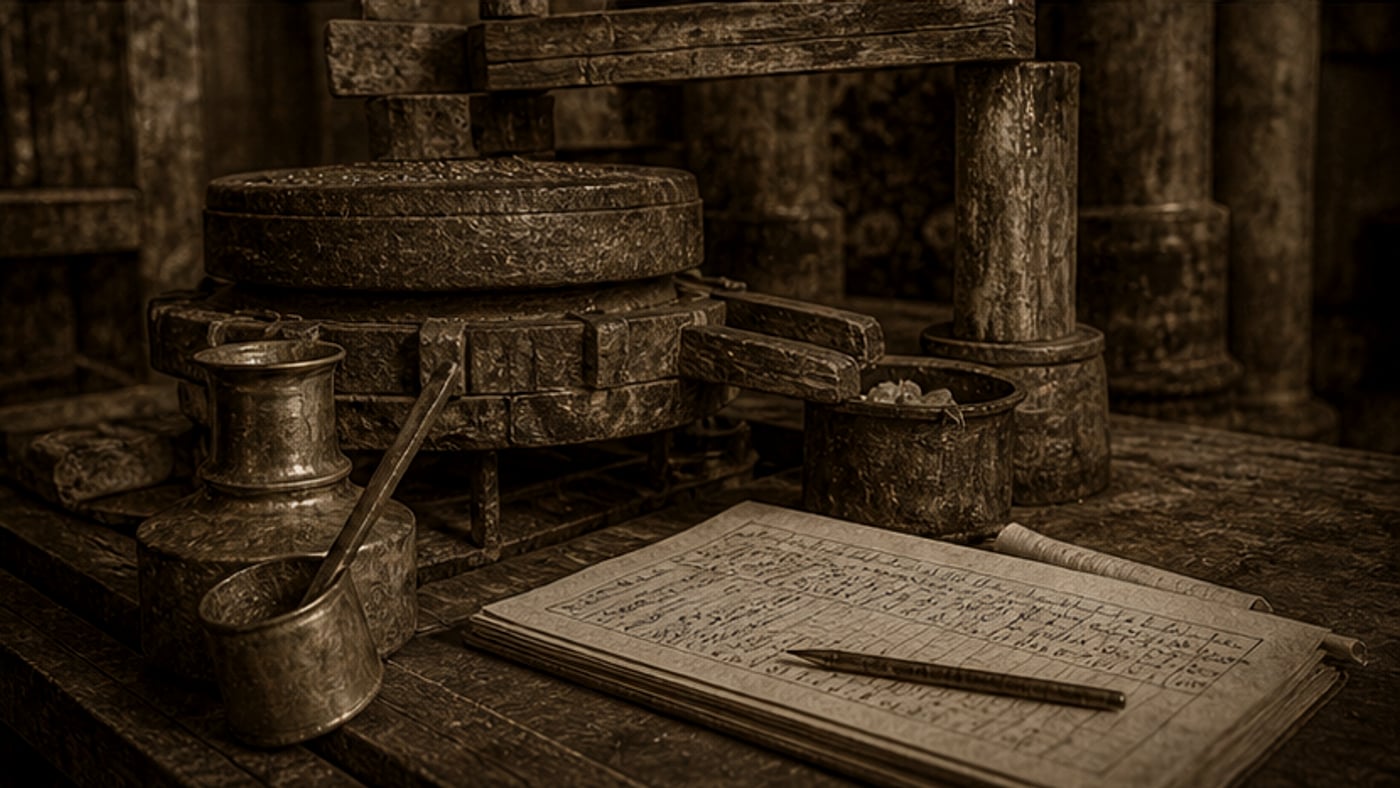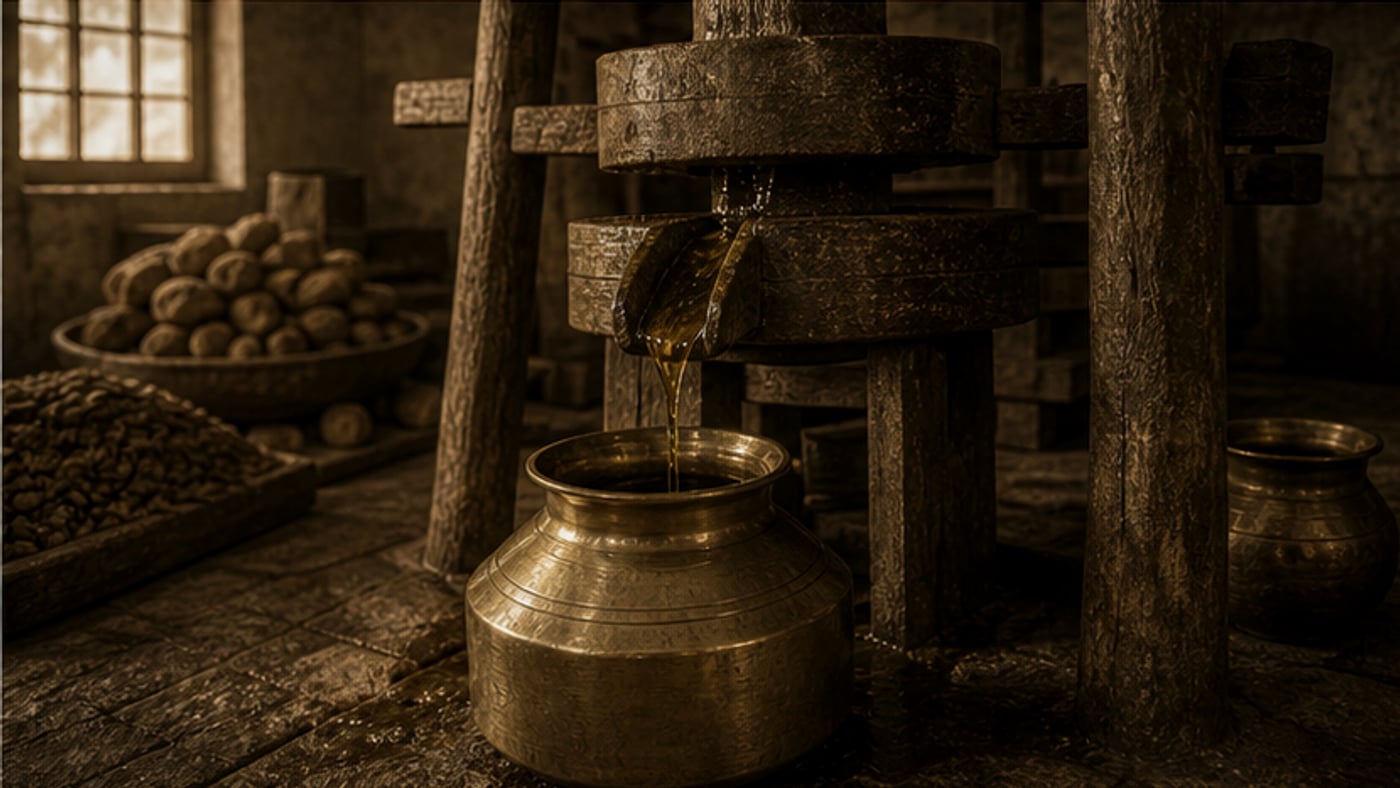
The press is in a shed at the end of a lane in a part of Sangli the satellite maps still mislabel. The lane has no name on Google. The shed has no signboard. Anyone who knows where it is, knows because they were brought there once by a father, or by a father’s father.
Inside, the original wooden ghaani still stands. It has been rebuilt four times since 1965 — the wood replaced piece by piece, the way the family will replace it again when the time comes. The bullock was retired in 1981 in favour of a low-RPM electric motor; that was the largest single change the press has accepted. The seed is still mustard. The press temperature is still under 30°C. The first oil of every batch is still tasted by a member of the family before the rest of the batch is bottled.
This is not romanticism. The slow press is not slower because it is more authentic; it is slower because the oil is better. The biochemistry is well-established now — heat above 60°C oxidises the unsaturated fats, drives off the volatile aromatics, breaks the natural antioxidants. Cold-press is what every other manufacturer once did, before the industrial revolution made it cheaper not to. Bharat is one of the houses that refused.
What the press makes
Mustard came first, in 1965. Groundnut in 1972. Deepam, the lamp oil, in 1987. Sesame in 1993. Coconut in 1996. Each one comes from a single source — mustard from the Doab seed varieties, groundnut from a single Junagadh supplier, sesame from a Madhya Pradesh cooperative, coconut from one stretch of the Tamil Nadu coast. The deepam blend is the family’s recipe, mixed in a room separate from the kitchen oils so the two are never confused.
The bottling line is small — three filling stations, two label machines, and a manual seal check. A bottle that does not pass the seal check is opened, the oil returned to the day’s batch, the bottle washed and refilled. There is no waste; there is no margin for it.
The audit decade
The 2000s changed what the press did on paper, not in practice. FSSAI compliance, ISO 22000, halal certification, the export-grade audits required for shipments to the UAE — all of these came in. The press did not move; the paperwork around it did. The family hired a quality officer in 2004. She is still here.
The first export shipment left for the UAE in 2007 — a single pallet of mustard oil for an Indian grocer in Sharjah. He had moved from Pune the year before and asked his mother for the oil she used. She named us. He called the office. The pallet went out on a Tuesday.
The diaspora found us
The Amazon.ae listing went up in 2018. The orders came not in pallets but in single bottles — one family at a time, in Sharjah, Abu Dhabi, Dubai, Al Ain. The press in Sangli stayed exactly where it was. The world reached out to it.
Today the third generation runs the company. They have engineering degrees, MBAs, opinions about supply-chain software. They have not changed the press. The original wooden ghaani is run once a month, on the first Monday, for the family’s own household supply. The mustard for that batch is the year’s first. The seed is the variety the press began with. The hands are the third generation.
Sixty years. One promise.